Sunday, January 12, 2014

Bora Ceremonial Grounds and the Milky Way: a Connection?


Most Aboriginal language groups in Australia practised initiation ceremonies. In some places, this tradition continues. During this ceremony, teenage boys were taken through a rite of passage, where they would perfectly recite the stories, laws, and customs they were taught, and perform the dances with extreme precision among other things (Figure 1). The initiation also involved a form of body modification, but most of these details are considered secret. This ceremony proved to their elders that they were ready to be men. In southeastern Australia, it was generally known as a Bora ceremony, taken from the Kamilaroi term for the word. The Bora ceremony was commented upon by the earliest European arrivals in Sydney. One of the first Bora sites identified was at Farm Cove in Sydney – what is now the Botanic Gardens near the Opera House.

Figure 1: Photograph of a Bora ceremony,
taken in 1898 by Charles Kerry.
National Library of Australia

Most Bora grounds have a distinct shape. They tend to consist of two rings of flattened earth, with an embankment of raised earth or stones, and a pathway connecting them. One is a larger “public” circle, where women and other people can attend. The other is a smaller sacred circle, which is considered sacred and secret. This is where the final part of the initiation and body modification takes place. Secret parts of the ceremony are not discussed out of respect to the Aboriginal elders.
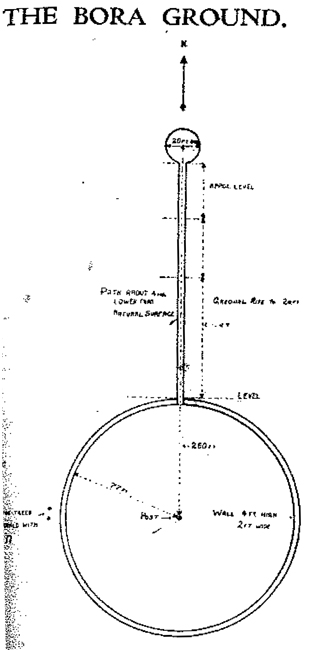
Figure 2: Casino Bora Ground, Richmond Valley, NSW.
Image from Sandra Bowdler (2000). A heritage study
of Indigenous ceremonial (Bora) sites. University of
Western Australia, Perth.

Bora ceremonies take place between August and the following March, which are the summer months. The ceremonial grounds are often laid out long before the ceremony is held, or even renewed from previous ceremonies. Although Bora ceremonies were held at any time over this long period, it seems many of them were held in August and September. And this may have astronomical significance.

It seems the Bora ceremony is connected to the Emu in the Sky. The Emu in the Sky is a spirit emu found in the Milky Way (Figure 3). This Aboriginal constellation is not made up of bright stars, but instead comprises dark patches in the Milky Way, stretching from the Coalsack Nebula near the Southern Cross down to the centre of the galaxy in Scorpius. Since male emus brood, hatch, and rear the emu chicks, it is symbolic of the initiation of adolescent boys by their male elders. In southeast Australia, the culture hero Baiame is believed to live behind the Milky Way. The son of Baiame, is a being called Daramulan, who watches over, and even comes down from the sky for, the Bora ceremony, and his wife is an emu.
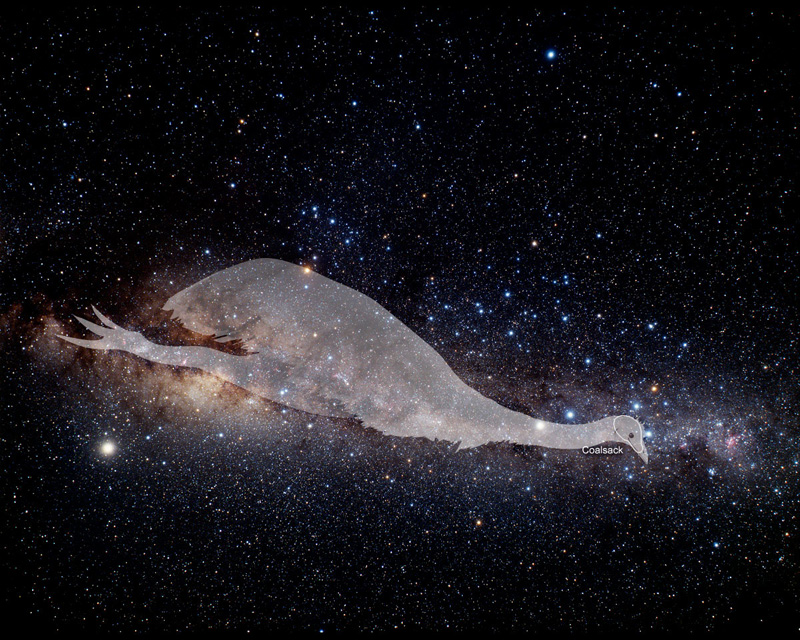
Figure 3: The Emu in the Sky. Image from
http://www.abc.net.au/science/starhunt/tour/virtual/coalsack/

One elder said that the Bora ceremonial ground was reflected in the Milky Way as the Sky Bora: two dark patches within the Milky Way that mimic the two earthly Bora circles (Figure 4). These dark patches are also within the celestial emu: the larger one is the Coalsack (the Emu’s head) and the other is down the Milky Way towards the Emu’s body. As it turns out, August and September is when the Milky Way is vertical above the south-southwest horizon in the evening sky. Because of this connection, the researchers – Robert Fuller (Macquarie University), Dr Duane Hamacher (University of New South Wales), and Professor Ray Norris (CSIRO/Macquarie University) – wondered if the Bora ceremonial grounds were oriented to the direction of the Sky Bora/Emu in the Sky when Bora ceremonies were held. Information collected by anthropologists learning from Aboriginal elders suggested as much, but Fuller, Hamacher, and Norris needed to demonstrate this.

Figure 4: the Sky Bora in the Milky Way at the time of year ceremonies were held
(evenings in August and September). Image made by R.S. Fuller using Stellarium.

Fuller and his colleagues collected data for 1,170 Bora grounds in New South Wales and southeastern Queensland. They identified 68 Bora grounds that contained clear information about the site’s orientation, from the large circle to small circle (mostly within 200 km of Brisbane). The 68 sites showed that a significant number of them were oriented to the southern quadrant – more so than any other direction (and by quite a bit more!).

This is interesting, but could these results be a product of chance? To test this hypothesis, the researchers used a statistical technique called a Monte Carlo simulation. This is where random orientations, like those of the Bora grounds, were simulated millions of times over. If these orientations were common, the simulation would confirm that. The researchers ran the simulation 100 million times. Only 303 of the simulations gave a result like the one found by Fuller and his colleagues. This means the probability of these orientations occurring by chance is one in 3 million, or 0.0003%! This confirms that there is definitely a preference for Bora grounds to be oriented towards the south. This coincides with the position of the Milky Way in the evening sky during August and September.

Is this conclusive proof that Bora ceremonial grounds were oriented to the position of the Milky Way in August and September? No. But it takes us one step closer to finding out. Fuller and his colleagues are currently working with elders across NSW to learn more about the Bora ceremony and its connection to the sky, which is starting to reveal new and interesting facts about this initiation ceremony.

To learn more about the research, check out the paper “Astronomical Orientations of Bora Ceremonial Grounds in Southeast Australia.” Australian Archaeology, No. 77, pp. 30-37.


Saturday, January 4, 2014

Charcoal Night: Re-Imagining the Night Sky

'Charcoal Night' - is a short film documentary about re-imagining the night sky, created in partnership with students from the Albury Wodonga Community College, the Astronomical Society of Albury Wodonga (ASAW) and Murray Arts. The documentary was shown at various high profile venues across the Albury/Wodonga region during National Science Week. This project was made possible with a NSW Inspiring Science Australia Grant.

Thursday, January 2, 2014

New University Course on Indigenous Astronomy

A new university course on Indigenous Astronomy will be taught at the University of New South Wales for the first time during Semester 1, 2014. The 3rd year course (ATSI 3006: Astronomy of Indigenous Australians) is worth 6 units of credit and is part of the new major in Indigenous Studies through the Nura Gili Indigenous Unit. It is one of 5 new courses on Indigenous Studies being developed for 2014. The new Indigenous Studies major was developed as a new way of teaching Indigenous Studies, which focuses on three themes:
  1. 'Continuities' show the ways in which Indigenous people use their traditional knowledge and cultural systems to sustain their communities today;
  2. 'Convergences, Ruptures, and Discontinuities' provide students with a variety of theoretical approaches for understanding the impact of colonisation on Indigenous peoples and communities;
  3. 'Navigating the Interface' enables students learn and appreciate the complexities of knowledge production in Indigenous cultures.

Image by Paul Curnow and Gail Glasper.

ATSI 3006 focuses on the ways in which astronomical knowledge is developed, utilised, and encoded in the oral traditions and material culture of Indigenous peoples, with a focus on Aboriginal Australians and Torres Strait Islanders. This course will introduce students to the growing inter-discipline of cultural astronomy and explore the astronomical knowledge and traditions of Indigenous Australians. Students will learn about the history, development, theory, and methods of cultural astronomy, followed by a conceptual (non-mathematical) treatise of positional astronomy and celestial mechanics using the new state-of-the-art planetarium at Sydney Observatory. Students will then explore the myriad ways in which the sun, moon, and stars inform and guide Indigenous practices such as navigation, calendar development, and food economics, as well as social structure, including customs, laws, kinship structure, and marriage/totem classes.

"Milky Way" bark painting by Mawalan Marika from Yirrkala, NT (1963). Australian Museum collection.

The teaching method is not focused on lecturing. Instead, short lectures will be followed by in-class activities, discussion groups, and field trips. Assessments are based on in-class activities, a research project, and an industry project. The latter involves working with a curator, astronomer, or educator to develop educational materials, curate an exhibit, develop an Indigenous astronomy program for a planetarium/observatory, or produce a media/art exhibit.

Students will also learn about opportunities to continue their study of Indigenous Astronomy through an Honours, Masters, or Doctoral program at UNSW.

Yuin elder Uncle Paul McLeod (right) teaches Nura Gili students about
traditional ecological knowledge at Jervis Bay. Photo by D. Hamacher.

But what if I am not majoring in Indigenous Studies - can I still take the course?

YES!

The course is available as a General Education unit (GenEd), meaning *any* student at UNSW that is eligible to enrol in a 3rd year course - regardless of their major - can take the subject, including foreign exchange and study abroad students.

About the Course Conveynor

Duane and Uncle Paul.

The course was developed, and will be taught, by Dr Duane Hamacher. Duane is a Lecturer and ARC Discovery Early Career Researcher at Nura Gili, specialising in Indigenous astronomy. Born and raised in the United States, he graduated with a degree in physics from the University of Missouri before moving to Sydney to complete a Masters degree in astrophysics at UNSW. He then earned a PhD in Indigenous Studies from Macquarie University with a thesis on Aboriginal Astronomy. Duane worked as an astronomy educator at Sydney Observatory for five years and is now a consultant curator. He has a passion for teaching and hopes to make this course one of the most engaging, interesting, and enjoyable courses students will have during their degree program.

Tuesday, December 31, 2013

Exploring Astronomical Knowledge and Traditions in the Torres Strait: A Project Supported by the Australian Research Council

In previous posts, we explored aspects of cultural astronomy in the Torres Strait. The indigenous people of these islands have a culture based on astronomy, yet the last major work on Islander astronomy was published in 1907. And even then the author clarified that his study was grossly incomplete. In the 1993 book "Stars of Tagai" by Nonie Sharp (Aboriginal Studies Press), she explained how Islander people were guided by Tagai - who is seen as a large constellation stretching from the Southern Cross to Corvus, down to Scorpius. Although the book contains important astronomical information, it is not about Islander astronomy and it does not shed light on Islander knowledge relating to the Milky Way, Magellanic Clouds, sun, moon, any of the planets, or other astronomical phenomena.

The constellation of Tagai, on which Torres Strait Islander culture is based.
Image credit: Nonie Sharp, 'Stars of Tagai: The Torres Strait Islanders', based
upon a watercolour by Lieut.G.Tobin, Mitchell Library, and drawings of the
Tagai Constellation by Gizu and Mariget of Mabuiag. 

This left a gap in our knowledge about cultural astronomy in the Torres Strait. Dr Duane Hamacher, a Lecturer in the Nura Gili Indigenous Programs Unit at the University of New South Wales, realised the importance of this work and the fact that Islander staff at Nura Gili have close connections with their home country. In March 2013, he applied for a research grant through the Australian Research Council called the Discovery Early Career Researcher Award (DECRA). This highly competitive grant is designed to support researchers who are in the early stages of their academic careers (within 5 years of being awarded a PhD).

Dr Hamacher was successful and was awarded a DECRA to study Islander astronomy. The grant, worth $350,000, will cover the project over a period of three years.


Project Description: The astronomical knowledge of Indigenous people across the world has gained much significance as scientists continue to unravel the embedded knowledge in material culture and oral traditions. As social scientists gain a stronger role in emerging scholarship on Indigenous astronomy, growing evidence of celestial knowledge is being rediscovered in artefacts, iconography, document archives, literature, folklore, music, language and performances. This project seeks to investigate an underexplored area of astronomical knowledge in Australia. It will be the first comprehensive study of the astronomical traditions of Torres Strait Islanders and will add to the growing body of knowledge regarding Indigenous astronomy.

This project will involve surveying over 1500 published documents on Islander culture, exploring archival documents in libraries, studying artefacts and artworks in museums across Australia and Europe, and conducting ethnographic fieldwork in the Torres Strait. This is where Dr Hamacher will live with Islander communities to learn firsthand from elders about their astronomical knowledge and practices. See the video below about current efforts to explore and record Islander astronomy in the Torres Strait.