Wednesday, April 11, 2012

Ngadjuri Astronomy, South Australia

By Paul Curnow

Australian night skies by world standards are still quite good. Regrettably today, in heavily populated countries the light pollution combined with industrial pollution has lead towards a good deal of our galaxy being obscured from our eyes. However, although Australia still has many regions that offer naked eye astronomers great views of the heavens, these views would on many occasions likely pale in comparison to what Aboriginal Australians would have seen in the past.

One such group is the Ngadjuri People from the mid-north region of South Australia. The Ngadjuri territory stretches up through Freeling, Kapunda, Tarlee, Riverton, and Clare then all the way up towards Quorn, then inland in an easterly direction towards Bimbowrie, back down south through Ketchowla, Burra, Eudunda and Truro. The Ngadjuri had lived in this region for thousands of years before Europeans first started arriving on South Australian shores in the mid 1800’s. However, through brutal government policies and the invasion of the region by European settlers in the mid 1800’s most Ngadjuri People were eventually forced off their traditional homelands, or became victims of the deadly pathogens that the Anglo-Saxons had brought with them.

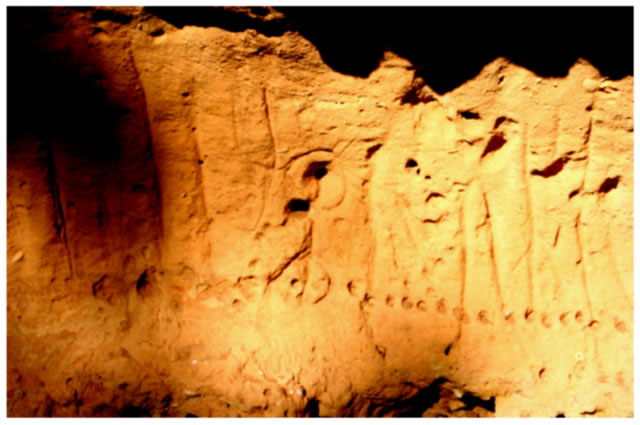
Figure 1: Turtle petroglyph located at Ketchowla.

Furthermore, evidence suggests that in the past the Ngadjuri Peoples once lived in larger populations around the mid-north when it was much wetter. For example, 18,000 years ago South Australia was still in the grips of an ice age and evidence suggests that the region would have been far less arid than today with a more plentiful supply of fresh drinking water. In addition, the region is home to many ancient petroglyphs that suggest human occupation has existed in the region for aeons.

Little has been recorded or passed down about the stellar beliefs of the Ngadjuri People; however, a number of snippets of how they viewed the nightly ballet of stars above have survived. Additionally, there is some crossover in the ways the skies were seen between bordering groups such as the Kaurna on the Adelaide Plains to the south and the Adnyamathanha in the Flinders Ranges to the north.

Figure 2: The beautiful Flinders Ranges of South Australia.

For example, the Ngadjuri People see the Southern Cross as the footprint of majestic Wedge-tailed Eagle Aquila Audax. Eagles and other Australian Birds feature strongly in many stories told by Indigenous Australians and the Ngadjuri called the Southern Cross Wildu. This belief corresponds with the Adnyamathanha view of this area of sky, which they also called Wildu. The Lutheran missionaries Clamor Schürmann and Christian Teichelmann who arrived in the Adelaide colony in 1838 had recorded that the Kaurna People also have an eagle in the sky, which Schürmann and Teichelmann spelt as Wilto.

Figure 3: Lutheran missionary Christian Teichelmann.  Source: Lutheran Archives.

In the Dreaming of the Ngadjuri People there was once a camp in the Orroroo district when it was believed that animals were human beings. According to Ngadjuri Elder Barney Warrior (1873-1948), Wildu had been out hunting with the crow one day. When they returned from their hunt Wildu had not given the crow a fair share of the food they had collected, so the crow became angry and set a trap so that the eagle would injure his foot by stepping on a sharpened kangaroo bone. The eagle had tried to pursue the crow but never caught up with him. The word for crow is Wakala and it is conceivable based on other Aboriginal names around Australia that this may have been the star Canopus in the constellation of Carina. For example, the Boorong name War, and the Boandik Wa or Wah.

"Why do Aboriginals argue so much over the correct way of spelling of their ancient words and language? It's not the way that you spell it that counts, it's the way ya correctly pronounce it that matters...." - Marvyn McKenzie (1964 - ) - Adnyamathanha Man

Our galaxy contains approximately 300,000 million stars and we still call it the Milky Way, after the Ancient Greek belief that the goddess Hera had squirted breast milk across the heavens to create the galaxy. To the Ngadjuri People the band of the Milky Way was known as Wali’bari and like the Kaurna and Ramindjeri Peoples to the south, it was seen as a river stretching across the sky (Wali or Wadli = hut, Bari = river or creek). Strewn along the banks of this celestial river are a number of bark huts or as they are commonly referred to throughout Australia 'wurlies'.

Additionally, the stars of the constellation of the Southern Triangle are known as Winda’gudna. When translated Winda’gudna literally means ‘large owl droppings’ (Winda = owl, Gudna = excreta). The term for ‘star’ in the Ngadjuri language is Budli. Furthermore, prominent in southern skies during summer is the Pleiades Cluster. The Pleiades are an open cluster of stars, which are believed to have formed approximately 50-60 million years ago, and are located some 378 light years away from our sun. The Ngadjuri called these stars Bulali.

Figure 4: The open star cluster the Pleiades, located within the constellation of Taurus.

In addition, the nightly motion of the stars and the moon were used as a calendar to monitor the seasons. This was paramount to survival in Aboriginal society to assure that they would know which bush foods were available throughout the year based on the seasonal changes of constellations in the sky. It was also of spiritual importance to ensure that ceremonies and other cultural practices were performed at the correct time. The Ngadjuri People knew the moon as Bera and the sun was known as Jandu or Djendu.

The Ngadjuri People, like other Aboriginal Groups of Australia shared an intimate relationship with their environment and the natural world for 45,000+ years. Today we are left with just a taste of the incredibly complex knowledge and understandings that groups like the Ngadjuri People and other Indigenous Peoples of Australia have developed over these thousands of years. This early drive to identify with the night sky still fires the enthusiasm of many contemporary astronomers. Optimistically, efforts will continue to safeguard these remaining snippets of stellar knowledge for future generations of Indigenous descendants and night sky enthusiasts. 

References
Amery, R. (2000). Warrabarna Kaurna: Reclaiming an Australian Language, Swets & Zeitlinger Publishers, Netherlands.

Clarke, P. (1990).  Adelaide Aboriginal Cosmology, Journal of the Anthropological Society of South Australia, Adelaide.

Knight, F. (personal communication).

Pring, A., Warrior, F., Knight, F. & Anderson, S. (2005).  Ngadjuri: Aboriginal People of the Mid North Region of South Australia, SASOSE Council Inc.

Pring, A. (2002).  Astronomy and Australian Indigenous People (draft), DETE, Adelaide.

Ridpath, I. & Tirion, W.  (2000). Collins Guide to the Stars and Planets 3rd Edition, Collins, London.

Willis, R. (1995). The Hutchinson: Dictionary of World Myth, Helicon & Duncan Baird Publishers, Oxford.

Thursday, March 15, 2012

Monuments Tied to the Sky: Ancient Astronomy and its Global Heritage


Sydney Observatory welcomes you to a special night about Archaeoastronomy.  Professor Clive Ruggles from the University of Leicester, will give a special talk about ancient stone monuments and their relationship to astronomy.  This is a must see event!

The evening also includes a telescope viewing (weather permitting), a glass of wine or cup of tea, and is presented in Sydney Observatory’s marquee overlooking the beautiful Sydney Harbour.  A short ‘how to view the Transit of Venus’ presentation will be offered after the key-note presentation.

Location: Sydney Observatory
Date: Wednesday, 30 May 2012
Time: 6:00-8:00 pm
Cost: $18 adult, $14 concession - $16 adults members, $11 concession members
Bookings:  Book online or call (02) 9921 3485


Monuments Tied to the Sky
Ancient Astronomy and its Global Heritage

Naked-eye observations of the sky stretch back countless millennia into prehistory. In today’s brightly lit world it is all too easy to forget just how overwhelming the dark night sky would have been to human societies in the past—a prominent part of the observed world that was impossible to ignore. The objects and cycles seen there were vital to people striving to make sense of the world within which they dwelt and to keep their actions in harmony with the cosmos as they perceived it. For the archaeoastronomer, certain ancient monuments provide tantalising glimpses of long lost beliefs and practices relating to the sky, although they have to be interpreted with considerable caution. In this lecture Clive Ruggles, Emeritus Professor of Archaeoastronomy at the University of Leicester, will describe some major new discoveries made in recent years, focusing on his own work in Peru, Polynesia, and prehistoric Europe, and describe the efforts of UNESCO and the International Astronomical Union to preserve and protect the often-fragile heritage of ancient astronomy around the planet.

The Thirteen Towers of Chankillo, in Peru, a 2300-year-old solar observation site that hit the headlines
in March 2007 with the first publication of Ruggles’ work together with Peruvian archaeologist Ivan Ghezzi.

About the Speaker:
CLIVE RUGGLES is Emeritus Professor of Archaeoastronomy in the School of Archaeology and Ancient History at the University of Leicester, UK. He has worked in many parts of the world and published numerous books, papers and articles on subjects ranging from prehistoric Europe and pre-Columbian America to indigenous astronomies in Africa and elsewhere. He has ongoing fieldwork projects in Peru and Polynesia and is a leading figure in the joint initiative by UNESCO and the International Astronomical Union to promote, preserve, and protect the world's most important astronomical heritage sites. See more at www.cliveruggles.net.

Tuesday, March 13, 2012

The Magellanic Clouds

by Duane Hamacher

Unlike their Northern hemisphere counterparts, Southern hemisphere observers have a rich tapestry of celestial objects above their heads.  of the thousands of visible stars, clusters, planets, and nebulae are three galaxies: the obvious plane of the Milky Way, and two small satellite galaxies.  Although visible for tens of thousands of years before European voyages, these clouds were eventually named after the famous Portuguese explorer, Ferdinand Magellan (1480-1521).  The first written account of the Magellanic Clouds was by the Persian astronomer Al Sufi and were observed by two Italian explorers at the end of the 15th century.


The clouds of Magellan.  Photo by the European Southern Observatory.

The dwarf galaxies, about 20 degrees apart in the night sky, are known as the Large and Small Magellanic Clouds, or LMC and SMC.  The LMC is about 14,000 light years across and contains the mass of 10 billion suns - 100 times less massive than the Milky Way.  The SMC is about 7,000 light years across and contains the mass of about 7 billion suns.  At a distance of 200,000 light years, it is one of the farthest objects that can be seen with the naked eye.

The LMC and SMC have a rich tradition in the cultures of Aboriginal Australians. It is featured in the oral traditions of most all Aboriginal groups.  Below are a handful of Aboriginal accounts of the LMC and SMC:

  • In the Northern Territory, Ngalia spirits (called the Walanari) live in the Magellanic Clouds and throw hot stones to the earth in anger if someone reveals secret knowledge.
  • In Western Australia, the Magellanic Clouds represent the camp of an old couple who can no longer obtain their own food. The Large Magellanic Cloud is the camp of the old man while the Small Magellanic Cloud is the camp of the old woman and a nearby star represents their fire. This story represents a celestial model of respect for elders and the need to share food with those who need it.
  • In Arnhem Land, the Magellanic Clouds represent an old man and woman by a campfire.  You can find a story from South Australia here.
  • The Adelaide people called the Magellanic clouds 'Ngakallamurro', said to literally mean "paroquet-ashes". Being white, they represent the ashes of the Blue Mountain lorikeet. These birds were assembled there by one of the constellations and were later treacherously roasted.
  • The Magellanic Clouds were known in the Lower Murray as Prolggi, which was translated as "cranes". The Yaraldi considered that there were two Prolggi in the sky, having got there after fighting with the emu spirit, Pindjali, who also became a heavenly body.
  • The Yaraldi people tell a story about two cranes who, knowing that the emus would hunt them and kill them, flew up into the air, circling around, higher and higher, until they reached the sky. They found it to be a good country to live in, so they stopped there. You can see them in the heavens at night, "in the form of two patches of clouds, like wisps of smoke, at the end of the Milky Way." The Aboriginal people's belief is that when anyone of them is knocked down and left bruised and unconscious on the ground by a person from another tribe, the brolgas comedown, lift him up and guide him home.
  • The Gundidjmara people held that the larger cloud was a 'gigantic crane', the smaller cloud being the female equivalent. A similar version has also been recorded in the Kamilaroi language of northern central New South Wales. As with their terrestrial counterparts, these celestial spirit beings migrated according to the season. In the winter sky, the cranes are seen lying to the southeast and then south of the Milky Way. In summer they shift towards the western side.

Wednesday, February 29, 2012

Sydney City Skywatchers - Lecture on Aboriginal Astronomy


Join the oldest operating astronomical group in Sydney. The group provides an opportunity for those interested in astronomy to share and broaden their interest in the sky. People at all levels are catered for from beginners to serious amateur astronomers. Whether you want to just listen to a monthly lecture or to discuss serious observing through a telescope, this is the club for you.

These meetings usually consist of brief reports of observations made during the month by club members and a presentation from a guest speaker followed by a light supper. There is a $2 fee for each meeting.

by Duane Hamacher
Monday, March 5th at 6:30 pm - Sydney Observatory

Aboriginal Australians had a complex astronomical knowledge system that may stretch back for over 50,000 years. This knowledge extended beyond having names and stories for celestial objects. It included a deep intellectual component that was used for navigation, time keeping, food economics, and social structure.

Recent research from the Aboriginal Astronomy Project at Macquarie University has revealed a wealth of astronomical knowledge and practices by Aboriginal people, including the construction of stone arrangements and ceremonial sites to cardinal directions and astronomical objects, such as the setting position of the sun or the orientation of the Milky Way. Aboriginal people paid careful attention to, and had explanations for, eclipses, comets, meteors, and variable stars. Research also suggests that oral traditions describing meteorite impact events remain strong after thousands of years.


In this talk, Duane Hamacher from the Aboriginal Astronomy Project will discuss the latest results from the Project and explore how Aboriginal Australians may very well be the world’s oldest astronomers.

Duane Hamacher giving a tour of Aboriginal rock art sites, including the famous Emu in the Sky engraving, 
in Kuring-gai Chase National Park north of Sydney.

About the Speaker

Duane Hamacher is a trained astronomer and science educator at Macquarie University and Sydney Observatory. After graduating in physics from the University of Missouri and completing a Master's degree in astrophysics at the University of New South Wales, he submitted a PhD thesis at Macquarie University where he researched the astronomical knowledge and traditions of Aboriginal Australians. He is currently the Jenni Chandler Fellow in Aboriginal Astronomy in the Department of Indigenous Studies and manages the Association for Astronomy at Macquarie.

Talks are followed by supper ($2 donation)

Open to Members and everyone who is passionate about astronomy.  It is possible to join Sydney City Skywatchers on the evening or take home a membership form.

Bookings are not required.

Thursday, February 23, 2012

Karrugang and the Origin of the Pleiades


This is a Gundungurra story from the Blue Mountains (NSW) about 
the origin of the star cluster Westerners call the Pleiades.

In the Dreaming, a group of sisters were pursued by a magpie named Karrugang, who wanted to make one of the sisters his wife.  One day, while digging for edible roots near a river, one of the sisters slipped into the river and became tangled in the weeds, drowning.  The magpie saved the woman and made her his wife.  The other sisters stayed at the camp with the crow and his wife.  The magpie was lazy and made all the women do the work.  The women frequently tried to escape, but the magpie would find and return them to his camp.  One day during a storm, the wife pulled stringy-bark from a tree to make a shelter whilst her sisters sang a charm song.  As the lazy magpie lay around, the sisters sang making the tree grow taller and taller.  They quickly climbed the bark into the sky where they are seen today as the sisters of the Pleiades.

A Magpie.  From true-wildlife.blogspot.com

Reference
Mathews, R.H. (2003).  Some mythology and folklore of the Gundungurra tribe.  Den Fenella Press, Wentworth Falls, NSW.

Wednesday, February 8, 2012

Ngaut Ngaut - A Lunar Calendar?

From Paul Curnow and Ray Norris (edited by Duane Hamacher)


On the banks of the Murray River, north of Adelaide, is a rock art site called "Ngaut Ngaut" that has astronomical connections.  However, those connections are shrouded in mystery.  The Traditional Owners know that some of the engravings represent the sun and moon, but the banning of their language and oral traditions by Christian missionaries over 100 years ago resulted in knowledge about this site being lost.


An Aboriginal guide named Cess explaining the fossils and rock art of Ngaut Ngaut
to the Supernova Group (from Adelaide Planetarium) in 2003.

Ngaut Ngaut is part of the Ngarrindjeri Nation, which encompasses the region stretching along the Coorong in South Australia to along the Murray River to Blanchetown further north.  The Traditional Custodians of Ngaut Ngaut are the Nganguraku (sometimes spelt Nganguruku), who form part of the Ngarrindjeri Nation.


Ngaut Ngaut was the site of Australia’s first archaeological excavation in 1927.  Dating evidence taken from the remains of ancient campfires suggests that humans have occupied this area as long ago as 27,000 years.  The site includes various engravings, or petroglyphs, of animals, people, deities, the sun and moon.  Close to the engravings are a series of dots and lines carved in the rock, which, according to the Traditional Owners, show the "cycles of the Moon". 

Engraving of the sun.  Image by Paul Curnow.
Lunar cycle tally marks at Ngaut Ngaut?  Image by Ray Norris.

This oral tradition has been passed through generations from father to son, but since initiation ceremonies were banned (along with the Nganguraku language) by Christian missionaries over a hundred years ago, only this fragment of knowledge survives, and it is not known exactly what the symbols mean.  Are they tally's of each full moon?  In parts of central New South Wales, Aboriginal men cut notches into sticks at each full moon so as to keep track of their age, so this idea is certainly plausible.  But what are the verticle lines above the dots?  What is the strange symbol in the middle?  Why are dots superimposed on the sun engraving?

The rich record engraved on the walls of Ngaut Ngaut has so far defied attempts at decoding it, but we are setting our sites on unlocking the astronomical secret, which will be the focus of future research.

-------------

Take a guided tour of Ngaut Ngaut here.

Friday, January 27, 2012

The Origin of the Moon


This is a Dreaming story from Cape York in far northern Queensland.

Many years ago, people realised that a light was needed at nighttime because they found it difficult to walk around or to hunt. The Sun lit up their daytime - something was needed to light up the night.

They held a big meeting and one idea was to collect a huge pile of firewood during the daytime hours and setting fire to it just as the Sun set. People thought that the fire would be big enough to light up the bush so that they could hunt and walk around and have corrobores. Most of the people thought that this idea was impractical.

One member of the tribe had great idea: why not make a special boomerang that would shine, throw it high in to the sky and at night this boomerang would give enough light to allow people and animals to see at night.

They made a giant boomerang. People tried to throw it high into the sky. They tried but they just couldn't throw it high enough.

Then, a very thin, old, weak man stepped forward and politely asked if he could try. Everyone laughed at him when they saw his weak, thin arms. One of the elders was a kind and wise man and he said the old man should be allowed to throw the boomerang.

And throw the boomerang the old man did! It went higher and higher and higher and finally stayed up in the sky as the Moon, shining down onto the people.

The shape of the boomerang can still be seen in the Moon every month.

Original Source: Questacon.